
Car Battery Testing & Replacement in Victoria, BC
Professional battery testing, replacement, starting-system checks and charging-system testing in Victoria, BC.
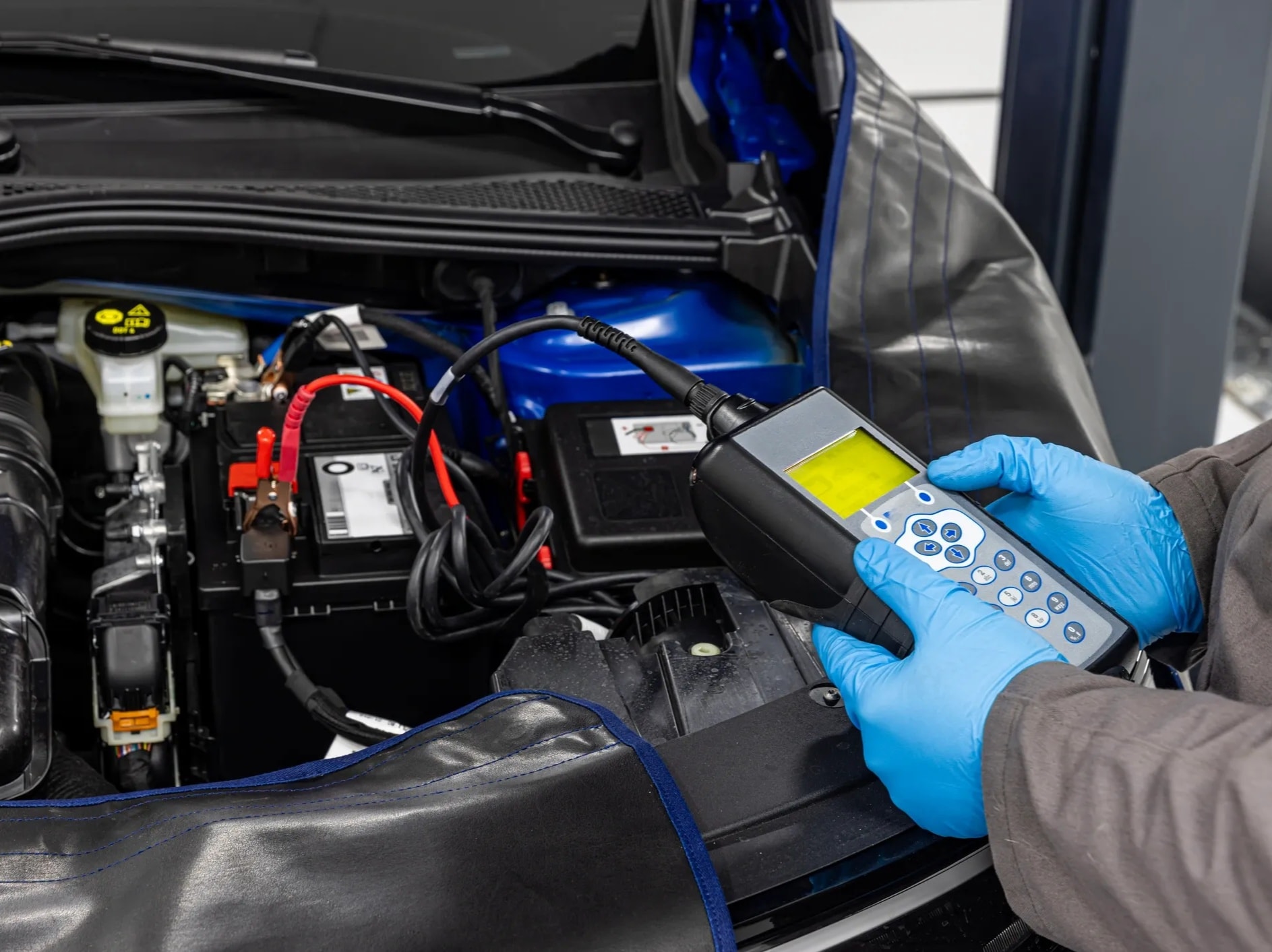
Slow cranking, a battery warning light, repeated no-start conditions or charging concerns can result from several possible problems — including battery condition, terminal or cable issues, alternator output, starter current draw or other starting and charging-system faults. At K-Tech Automotive, we test the battery and charging system before recommending replacement, so you get an accurate diagnosis rather than a parts guess.
Why Battery & Charging System Testing Matters
Battery performance decreases with age, temperature and vehicle use. Corrosion on terminals, deteriorating cables and charging-system performance can all affect starting reliability. Cold temperatures can significantly reduce the available starting capacity of a weakened battery — a battery that starts the vehicle reliably in summer may not have enough reserve to crank the engine on a cold Victoria morning. Regular testing identifies batteries and charging-system concerns before they result in a no-start.
Common Battery & Charging System Warning Signs
- Slow or hesitant engine cranking
- Battery warning light illuminated
- Vehicle requires repeated jump-starts
- Battery repeatedly loses charge
- Headlights dim noticeably at idle
- Electrical accessories reset or behave unusually
- Visible battery-terminal corrosion
- Battery is approaching the end of its expected service life
What We Inspect & Service
- Battery load testing and CCA measurement
- Battery condition / health testing
- Battery replacement for supported vehicle applications
- Alternator output voltage and current testing
- Charging-system performance testing
- Starter current-draw testing
- Battery terminal and cable inspection
- Battery terminal corrosion inspection
- Battery tray and hold-down inspection
- Starting-system checks
- Post-replacement charging-system verification
- Battery registration for supported applications where required
Battery Warning Light — What It May Indicate
A battery warning light does not necessarily mean the battery itself has failed. It can indicate a charging-system problem, alternator output concern, belt-related charging fault, wiring issue or another vehicle-specific fault. Proper testing is required before replacing parts. K-Tech diagnoses the battery, alternator output, system voltage and related starting and charging components to identify the actual cause before recommending any repair. Some vehicles — including BMW, Mercedes-Benz, Audi and Volkswagen — also require battery registration after replacement so the vehicle's energy-management system can adapt to the new battery's capacity and chemistry. K-Tech has the tools to perform battery registration on supported applications where required.
Frequently Asked Questions
Why is my battery warning light on?
The battery warning light commonly indicates a charging-system problem rather than automatically confirming a failed battery. It can be triggered by alternator output concerns, belt-related charging faults, wiring issues or other vehicle-specific faults. Testing may include battery condition, alternator output, system voltage and related starting and charging components to identify the actual cause.
How do I know if my battery needs replacement?
Slow cranking, repeated jump-starts, reduced battery capacity or a failed battery load test may indicate that replacement is needed. Proper testing should confirm battery condition first — symptoms like slow cranking can also be caused by starter concerns or charging-system faults rather than the battery alone.
Can a weak battery cause multiple warning lights?
Yes. Low system voltage can cause electronic systems to set warning lights or communication faults on some vehicles. If multiple warning lights appear after a battery-related event, the battery and charging system should be tested as part of the diagnosis.
Does my replacement battery need registration?
Some supported vehicles use battery-management or energy-management systems that require battery registration after replacement. This tells the system the new battery's capacity and chemistry so it can charge it correctly. K-Tech can perform battery registration on supported applications where required.
How long does a car battery normally last?
Battery life varies by battery type, vehicle, temperature, driving conditions and electrical load. Victoria's damp environment can accelerate terminal corrosion, which affects starting performance over time. Rather than relying on a fixed interval, a battery load test is the most reliable way to assess whether a battery still has adequate capacity for your vehicle.
Ready to Book Your Service?
Schedule online in minutes — no phone call required.