
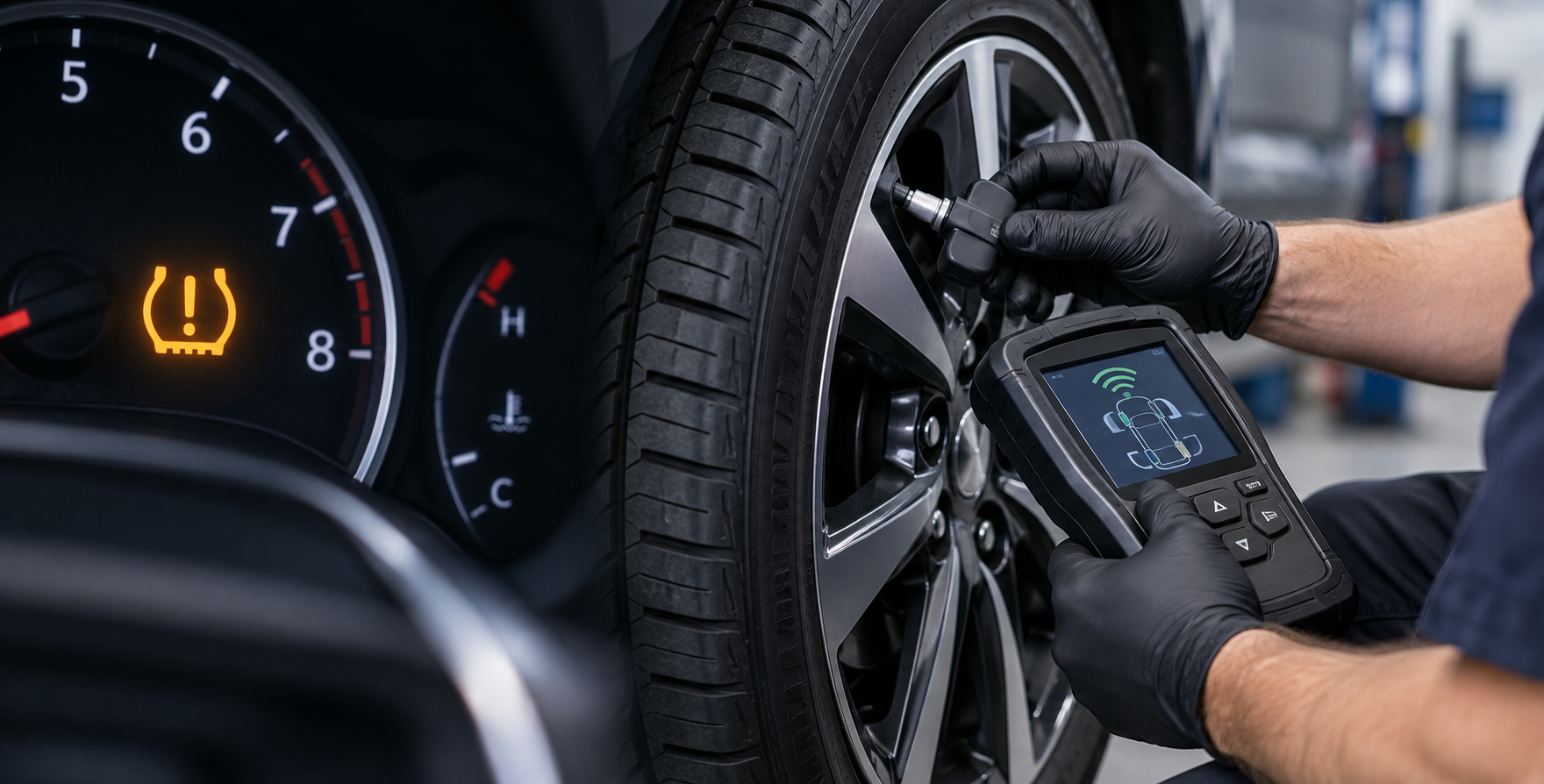
TPMS Diagnostics & Service in Victoria, BC
K-Tech Automotive diagnoses Tire Pressure Monitoring System concerns in Victoria, BC — including warning-light diagnosis, sensor testing, supported sensor replacement, and relearn or initialization where applicable to the vehicle.
When a TPMS warning light illuminates, the cause may range from a tire that is below the recommended pressure to a sensor fault, a communication issue, or a relearn condition following a wheel change. At K-Tech Automotive in Victoria, BC, we diagnose TPMS concerns using professional diagnostic equipment appropriate to the vehicle and system. TPMS systems vary by vehicle design. Some vehicles use direct TPMS, where individual pressure sensors are mounted in each wheel and transmit pressure data to the vehicle's control system. Others may use indirect monitoring strategies that infer pressure changes from wheel-speed information rather than dedicated pressure sensors. The diagnostic approach, sensor service options, and any required relearn or initialization procedures depend on the vehicle, manufacturer, TPMS system type, sensor type, and wheel setup — there is no single universal procedure that applies to every vehicle. Normal tire inflation should follow the vehicle manufacturer's recommended cold-tire pressure shown on the vehicle placard or applicable manufacturer information — not the maximum pressure printed on the tire sidewall, which is a load-rated limit rather than a recommended operating pressure.
Understanding Your TPMS Warning Light
A steady TPMS warning light often indicates that one or more tires may be below the recommended pressure or that another pressure-related condition exists. Checking and correcting tire pressure is the appropriate first step when a steady light appears. A flashing TPMS light may indicate a system fault on many vehicles — such as a sensor communication issue, a sensor that has stopped transmitting, or a relearn condition — and may require diagnosis of the sensors, sensor communication, or relearn status rather than simply adjusting tire pressure. Not every TPMS warning light indicates a failed sensor. Low tire pressure is the most common cause of a steady TPMS light. Sensor faults, sensor battery end-of-life, communication errors, and relearn conditions are separate causes that require diagnosis to identify accurately.
Warning Signs to Watch For
- Steady TPMS warning light — may indicate one or more tires are below recommended pressure
- Flashing TPMS warning light — may indicate a system fault requiring diagnosis on many vehicles
- TPMS light on after a seasonal wheel or tire change — may indicate a relearn or sensor recognition condition
- TPMS light that returns after tire pressure has been corrected — may indicate a sensor or system fault
- No TPMS readings displayed for one or more wheels — may indicate a sensor communication issue
What We Inspect & Service
- TPMS Warning Light Diagnosis
- TPMS System Diagnostics
- TPMS Sensor Testing
- TPMS Sensor Replacement for Supported Applications
- TPMS Programming / Relearn Where Applicable
- Sensor ID Registration & Initialization Where Applicable
- TPMS Valve Stem & Service Kit Replacement Where Applicable
- System Reset / Verification According to Vehicle Procedure
TPMS Sensor Service, Programming, and Relearn
Where diagnosis confirms that a TPMS sensor requires replacement, K-Tech can service TPMS sensors for supported applications. Sensor replacement may also involve valve-stem and service-kit replacement where applicable during sensor service. After sensor replacement, wheel changes, or certain service procedures, many vehicles require a TPMS relearn, initialization, or sensor ID registration procedure before the system will recognize the sensors and clear the warning light. The required procedure varies by vehicle, manufacturer, TPMS system type, sensor type, and wheel setup. Some vehicles perform an automatic relearn while driving; others require a specific tool-assisted procedure. We follow vehicle-specific procedures rather than a one-size-fits-all approach. TPMS sensors with internal batteries have a finite service life, but actual life varies with sensor design, vehicle use, and operating conditions. A sensor that has reached end of battery life will typically stop transmitting, triggering a system fault rather than a low-pressure warning. After a seasonal wheel or tire change, some vehicles may require sensor recognition, relearn, initialization, or ID registration depending on the vehicle and wheel setup. Not every seasonal changeover requires a programming or relearn procedure — it depends on the vehicle and how the alternate wheel set is configured. For seasonal tire changeover service itself, see our Tire Service page.
Frequently Asked Questions
Why is my TPMS light on?
A steady TPMS light most often means one or more tires are below the recommended pressure. Check and correct tire pressure first. If the light remains on after correcting pressure, or if the light is flashing, a sensor fault, communication issue, or relearn condition may be present and diagnosis is recommended.
Does a TPMS warning light always mean a bad sensor?
No. Low tire pressure is the most common cause of a steady TPMS warning light. Sensor faults, sensor battery end-of-life, communication errors, and relearn conditions are separate causes. Diagnosis is needed to determine the actual cause before recommending sensor replacement.
What is the difference between a steady and flashing TPMS light?
A steady TPMS light often indicates a pressure-related condition — one or more tires may be below the recommended pressure. A flashing TPMS light may indicate a system fault on many vehicles, such as a sensor that has stopped communicating or a relearn condition. The exact meaning can vary by vehicle — consult your owner's manual or have the system diagnosed.
Do all vehicles use the same type of TPMS?
No. Some vehicles use direct TPMS with individual pressure sensors mounted in each wheel. Others may use indirect monitoring strategies based on wheel-speed information. The diagnostic approach and any required service procedures depend on the vehicle and system type.
Why is my TPMS light on after a seasonal tire change?
After a seasonal wheel or tire change, some vehicles require a sensor recognition, relearn, or initialization procedure before the system will recognize the sensors on the newly installed wheels. Not every seasonal changeover requires this — it depends on the vehicle and wheel setup. If the light comes on after a changeover, we can diagnose the condition and perform the appropriate procedure for your vehicle.
What pressure should I inflate my tires to?
Inflate your tires to the vehicle manufacturer's recommended cold-tire pressure shown on the vehicle placard — typically found on the driver's door jamb or door edge — or in your owner's manual. Do not use the maximum pressure printed on the tire sidewall as your inflation target; that is a load-rated limit, not a recommended operating pressure.
Ready to Book Your Service?
Schedule online in minutes — no phone call required.