
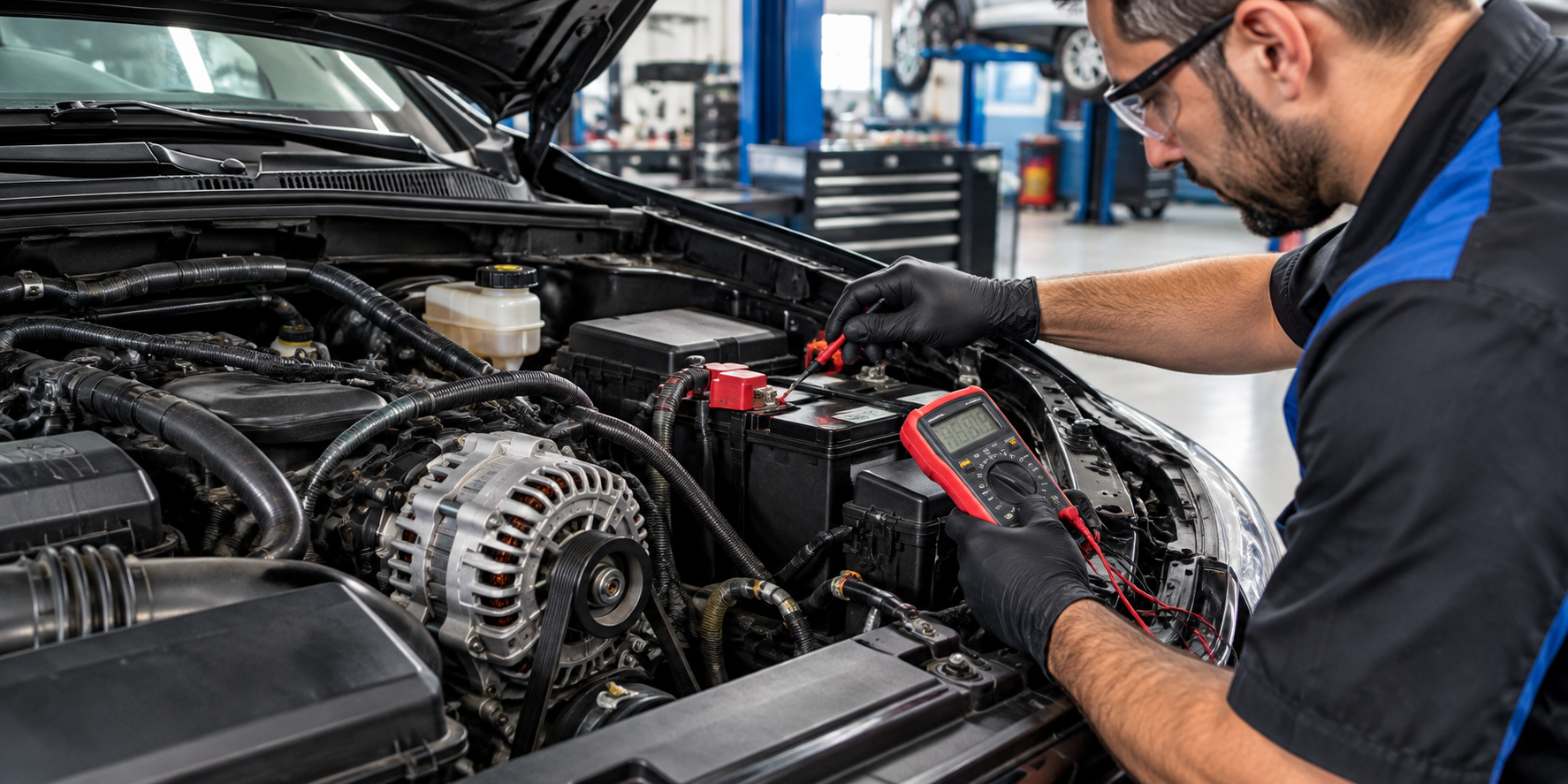
Starting & Charging System Diagnostics in Victoria, BC
No-start concerns, slow cranking, alternator output issues and charging-system warning lights — K-Tech Automotive diagnoses starting and charging system concerns in Victoria, BC for most makes and models.
A no-start condition, slow cranking or a charging warning light can result from several different causes within the starting and charging system. Slow cranking does not automatically mean the starter has failed. A battery or charging warning light does not automatically mean the alternator has failed. Battery voltage alone does not confirm alternator condition. At K-Tech Automotive, we test the starting and charging system before recommending any repair — so the diagnosis is based on what the vehicle is actually doing, not on assumption.
Why Proper Starting & Charging Diagnosis Matters
The starting and charging system involves the battery, starter, alternator, wiring, connections and the vehicle's power and ground circuits working together. A fault in any one of these areas can produce similar symptoms — including no-start conditions, slow cranking, intermittent starting concerns or a charging warning light. Charging-system specifications also vary by vehicle and system design; there is no single universal charging voltage that applies to every application. Accurate diagnosis requires testing the system under the right conditions, not replacing parts based on symptoms alone.
Common Starting & Charging System Warning Signs
- Vehicle will not start
- Engine cranks slowly or hesitates before starting
- Intermittent or unpredictable starting concerns
- Battery or charging warning light illuminated
- Charging-system performance concern
- Alternator output concern
- Starting concern that varies with temperature or load
- Electrical accessories behaving unusually during or after starting
What We Inspect & Service
- Starting & Charging System Diagnosis
- No-Start Electrical Diagnosis
- Slow-Crank Concern Diagnosis
- Intermittent Starting Concern Diagnosis
- Starter Current-Draw Testing
- Alternator Output Voltage Testing
- Alternator Output Current Testing
- Charging-System Performance Testing
- Battery / Charging Warning-Light Diagnosis
- Electrical Connection Inspection
- Power & Ground Circuit Testing
- Repair Recommendations Based on Diagnostic Findings
What a Charging Warning Light Actually Indicates
A battery or charging warning light signals that the vehicle's charging system has detected a concern — it does not confirm which component has failed. The cause may involve alternator output, a belt-related charging fault, a wiring or connection issue, a power or ground circuit concern, or another vehicle-specific fault. Battery voltage alone is not a reliable indicator of alternator condition; the alternator must be tested under load to assess its actual output. K-Tech Automotive tests the starting and charging system to identify the actual cause before any repair is recommended. The battery is one part of this system — battery testing, battery replacement and battery registration remain the primary focus of our Battery Service page.
Frequently Asked Questions
My car won't start — does that mean the starter has failed?
Not necessarily. A no-start condition can have multiple causes within the starting and charging system, including battery condition, connection issues, power and ground circuit faults, or starter current-draw concerns. Proper testing is required to identify the actual cause. We diagnose the starting system before recommending any repair.
My engine cranks slowly — is that the starter?
Slow cranking does not automatically mean the starter has failed. It can result from a battery that no longer has adequate capacity, a connection or cable concern, a power or ground circuit issue, or a starter current-draw concern. Testing is required to determine which part of the starting system is responsible.
My charging warning light is on — does that mean the alternator needs replacing?
A charging warning light does not automatically mean the alternator has failed. It can be triggered by alternator output concerns, belt-related charging faults, wiring or connection issues, or other vehicle-specific faults. Battery voltage alone does not confirm alternator condition. We test the charging system under load to assess actual alternator output before recommending any repair.
What is starter current-draw testing?
Starter current-draw testing measures the amount of current the starter motor draws when cranking the engine. An abnormally high or low current draw can indicate a concern with the starter or the starting circuit. This test is part of a complete starting and charging system diagnosis.
What is alternator output testing?
Alternator output testing measures the voltage and current the alternator produces while the engine is running. Charging-system specifications vary by vehicle and system design. Testing under the appropriate conditions is required to assess whether the alternator is performing within specification for your specific vehicle.
What is the difference between this service and Battery Service?
Battery testing, battery replacement and battery registration are the primary focus of our Battery Service. Starting & Charging System Diagnostics focuses on diagnosing no-start concerns, slow-crank concerns, alternator output concerns and charging-system performance issues. The battery is one part of the starting and charging system — if a battery concern is identified during diagnosis, we will advise accordingly.
Ready to Book Your Service?
Schedule online in minutes — no phone call required.